
Fuji Five Lakes

Cycling through the Fuji Five Lakes region is one of Japan’s most rewarding rides, combining majestic views of Mount Fuji with a mix of tranquil lakes, forested roads, and cultural stops. The full circuit links Yamanaka-ko, Kawaguchi-ko, Sai-ko, Shoji-ko, and Motosu-ko, covering roughly 60 kilometers of scenic terrain. Riders can enjoy smooth lakeside paths, rolling hills, and countless photo opportunities of Fuji reflected on the water. With local cafés, onsen, and viewpoints scattered along the route, it’s a perfect blend of challenge, beauty, and relaxation—an unforgettable way to experience the heart of the Fuji Highlands
There are also multiple roads to climb Mt. Fuji
The Route
There isn’t an official course around the Fuji 5 Lakes so the following is the Wabisabi recommended route
The Five Lakes
Lake Yamanaka
Cycling around Yamanaka-ko, the largest of the Fuji Five Lakes, offers stunning views of Mount Fuji reflected on the water’s surface. The mostly flat 13-kilometer lakeside route is perfect for a relaxed ride, winding past quiet forests, open meadows, and cozy cafés. On clear days, the iconic mountain dominates every turn, creating one of Japan’s most scenic cycling experiences. Whether you bring your own bike or rent locally, Yamanaka-ko is an unforgettable blend of nature, serenity, and Fuji views.

Lake Kawaguchi
Cycling around Kawaguchi-ko is one of the most iconic rides in Japan, offering breathtaking views of Mount Fuji framed by the lake’s calm waters. The 19-kilometer loop mixes gentle roads with quiet lakeside paths, passing through charming villages, flower parks, and viewpoints like Oishi Park and Nagisa Park. With plenty of cafés and photo stops along the way, it’s a perfect ride for both casual cyclists and photographers chasing the perfect Fuji reflection.

Lake Sai
Cycling around Sai-ko (Lake Sai) offers a more peaceful and intimate Fuji experience compared to its larger neighbors. The 10-kilometer route circles a quiet lake surrounded by deep forests and lava fields, with occasional clearings revealing dramatic views of Mount Fuji. Riders can stop at Saiko Iyashi no Sato Nenba, a traditional thatched-roof village rebuilt after a volcanic eruption, or simply enjoy the calm, natural beauty that defines this hidden gem of the Fuji Five Lakes.

Lake Motosu
Cycling around Motosu-ko (Lake Motosu) is a ride through one of Japan’s most striking natural landscapes. Known for its deep blue water and pristine clarity, the lake offers unforgettable views of Mount Fuji, including the one immortalized on Japan’s ¥1,000 bill. The 17-kilometer loop is more challenging than the other Fuji Five Lakes, with rolling hills and forested stretches, but the serenity and dramatic scenery make every climb worthwhile. It’s an ideal route for cyclists seeking both beauty and adventure.

Lake Shoji
Cycling around Shoji-ko (Lake Shoji) feels like discovering a secret tucked between the larger Fuji Five Lakes. The 5-kilometer route is short but rich in scenery, offering quiet roads, dense forest, and stunning reflections of Mount Fuji rising above the water. Often called the “Little Fuji Mirror,” Shoji-ko’s tranquil atmosphere and untouched nature make it perfect for a peaceful, unhurried ride — a place to slow down and savor Fuji’s quiet side.

Things to do and see
Getting there and away
Lake Kawaguchi (河口湖) is served by Kawaguchiko Station, the northern terminus of the Fujikyu Railway (Fujikyuko Line). The station is located in Fujikawaguchiko Town in Yamanashi Prefecture, and the lakeshore itself is roughly an 800-meter walk from the station building. All rail access to Lake Kawaguchi ultimately converges on this station.
From central Tokyo, the most common rail route begins at Shinjuku Station, one of the capital’s primary transport hubs. Travelers take a JR Chūō Line service westbound to Ōtsuki Station. Depending on the train type—rapid, local, or limited express—the JR segment typically takes between 55 and 80 minutes. At Ōtsuki, passengers transfer to the Fujikyu Railway for the final leg to Kawaguchiko. This portion of the journey takes approximately 55 to 60 minutes on a local Fujikyuko Line train. The total end-to-end travel time from Shinjuku to Kawaguchiko is generally around two and a half hours.
A direct alternative is the limited express Fuji Excursion, which runs from Shinjuku to Kawaguchiko without requiring a transfer at Ōtsuki. This service takes roughly 1 hour and 50 minutes to 2 hours, depending on the schedule. All seats on the Fuji Excursion are reserved, and reservations are strongly recommended, especially on weekends and during peak tourist seasons. There are only 4 or 5 (depending on the day) and they leave Shinjuku in the morning so be careful and check the train times. (Fuji Excursion website)
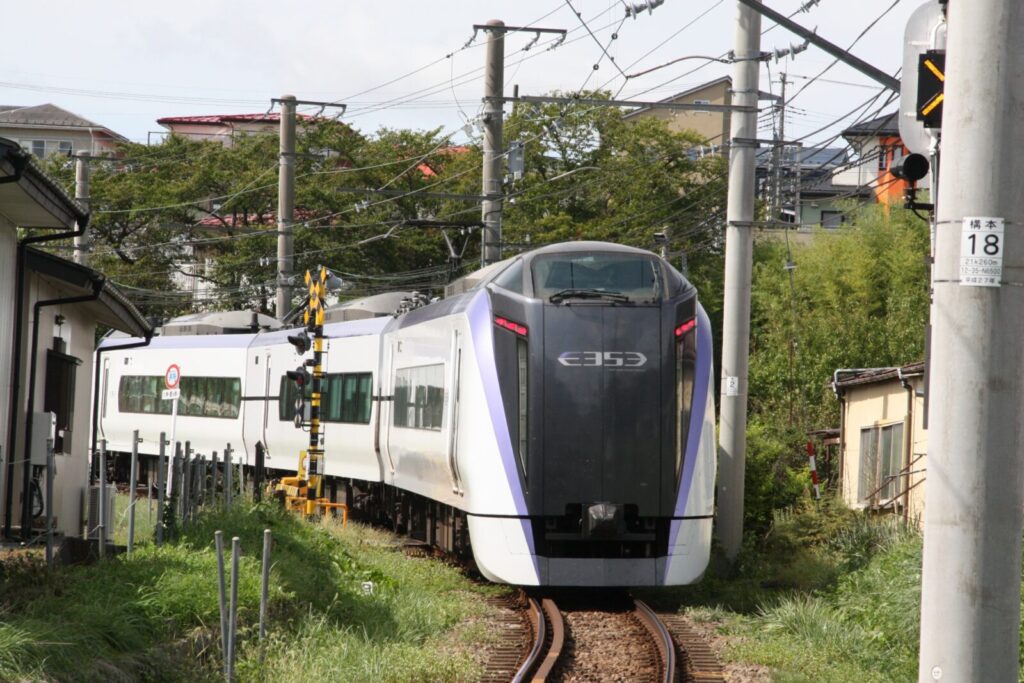
In terms of fares, the combined JR and Fujikyu local train route typically costs in the range of ¥2,500 to ¥3,000 one way, depending on train selection. The Fuji Excursion limited express costs more, generally around ¥4,000 or slightly above due to the limited express surcharge and mandatory seat reservation. For holders of the standard Japan Rail Pass, coverage applies only to the JR portion between Shinjuku and Ōtsuki. The Fujikyu segment requires a separate fare unless the traveler holds a JR Tokyo Wide Pass, which does cover the full route including the Fujikyu line.
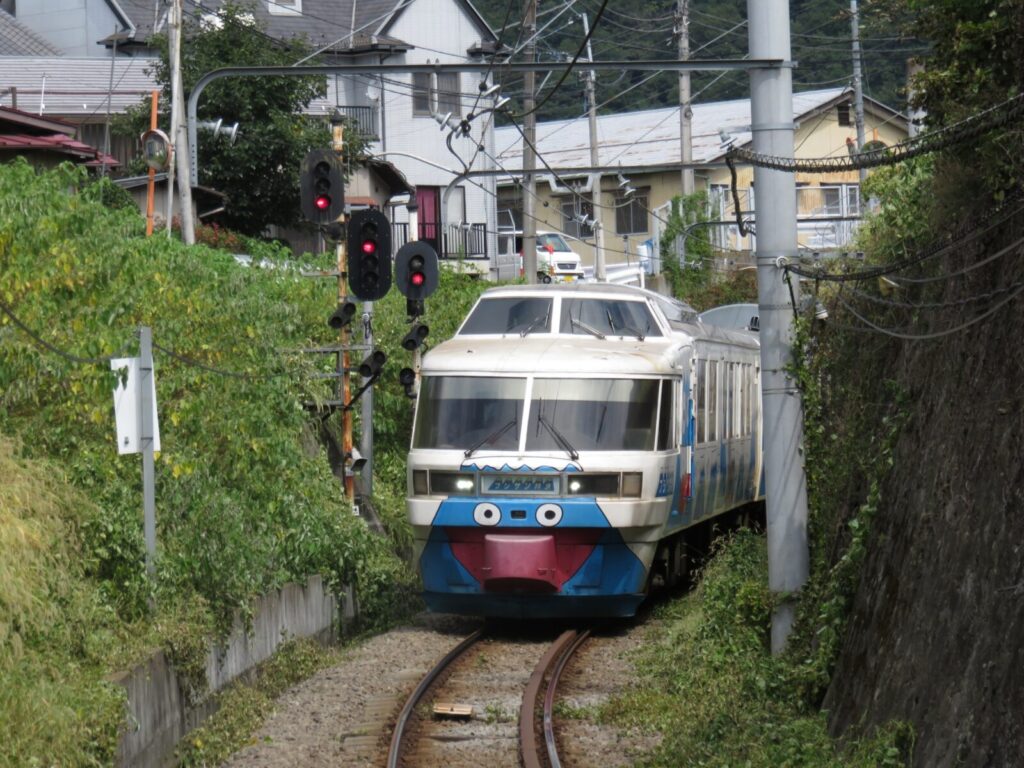
Along the Fujikyuko Line between Ōtsuki and Kawaguchiko, intermediate stations provide access to other Fuji area attractions. For example, Fujisan Station serves the city of Fujiyoshida, Fujikyu-Highland Station provides direct access to the Fuji-Q Highland amusement park, and Shimoyoshida Station is used by visitors heading to the Chūreitō Pagoda viewpoint.
Overall, rail access to Lake Kawaguchi is straightforward but involves either a transfer at Ōtsuki or advance reservation for a direct limited express. Travelers should allow approximately two to three hours each way from central Tokyo and plan departures carefully during busy travel periods.

