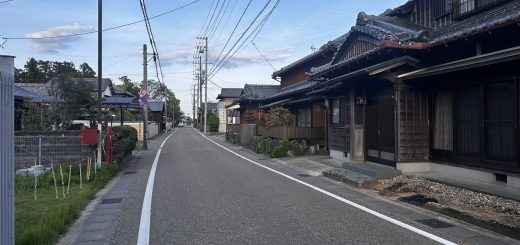
Kii Peninsula
Cycling around the Kii Peninsula from Toba to Wakayama covers approximately 350–400 kilometers, depending on the route taken. The journey begins in Toba, Mie Prefecture, known for its coastal scenery and maritime heritage. From there, the route follows the coastline south through towns such as Shima, Owase, and Kumano, offering views of the Pacific Ocean and access to parts of the UNESCO-listed Kumano Kodo pilgrimage network. Riders can visit sites such as Kumano Nachi Taisha and Nachi Falls before continuing west through the mountainous interior or along the coast toward Shingu and Tanabe. The route ends in Wakayama City, home to Wakayama Castle and a major ferry terminal. The terrain includes a mix of coastal roads, mountain climbs, and rural highways, with limited train access in some areas, making it ideal for experienced cyclists seeking a multi-day ride through a less-traveled part of Japan.
The Kii Peninsula is part of the Pacific Cycling Route.
The Route
Things to see and do
Southernmost point in Kyushu
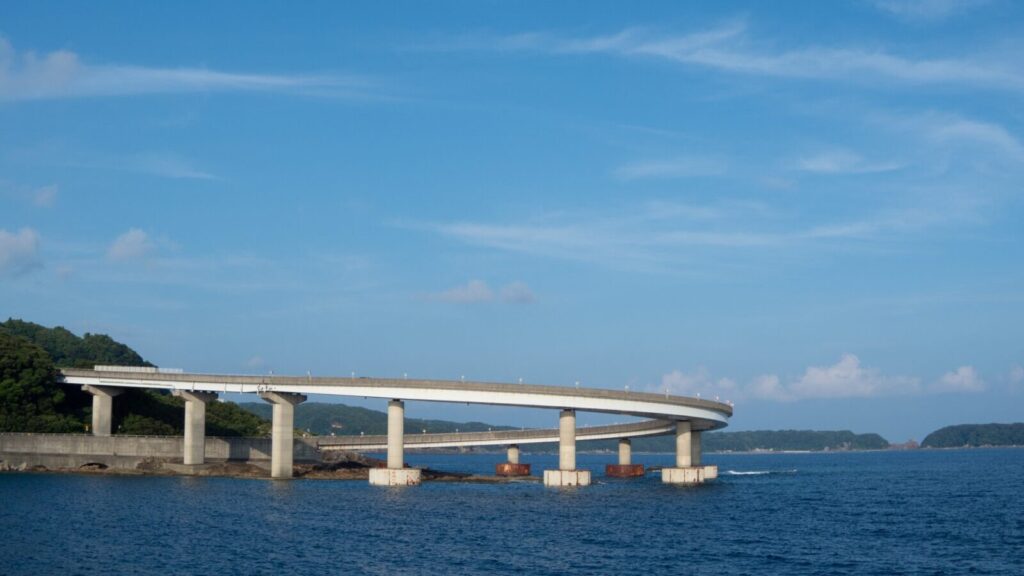
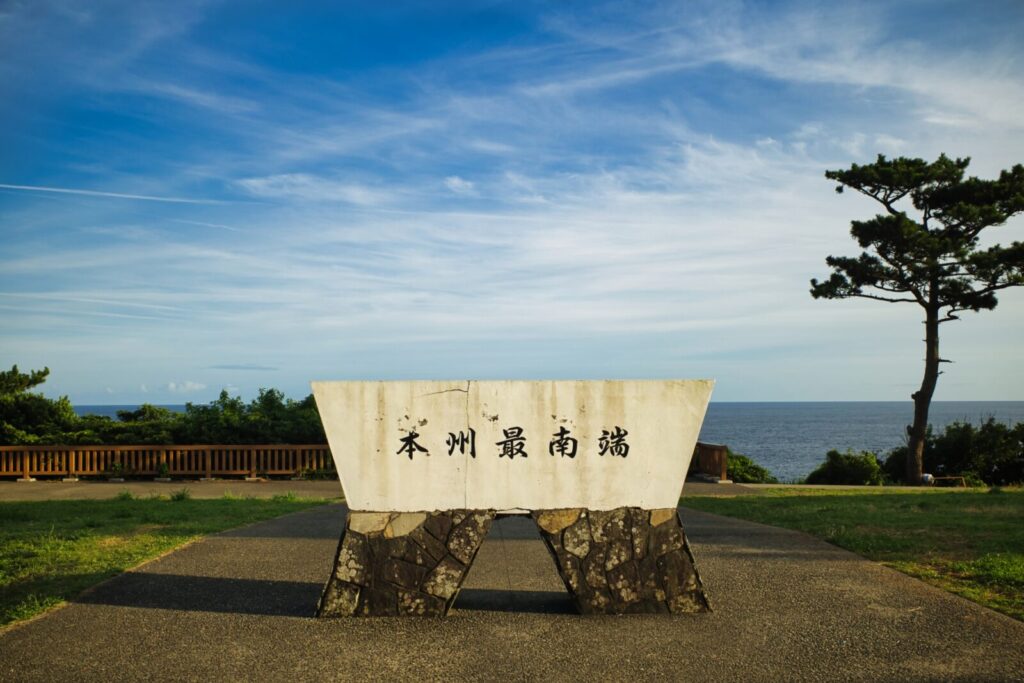
The southernmost point in Honshu is at the southend of the Kii Peninsula near Kushimoto. It’s also the location of a cool loop bridge over the ocean
Kumano Kodo
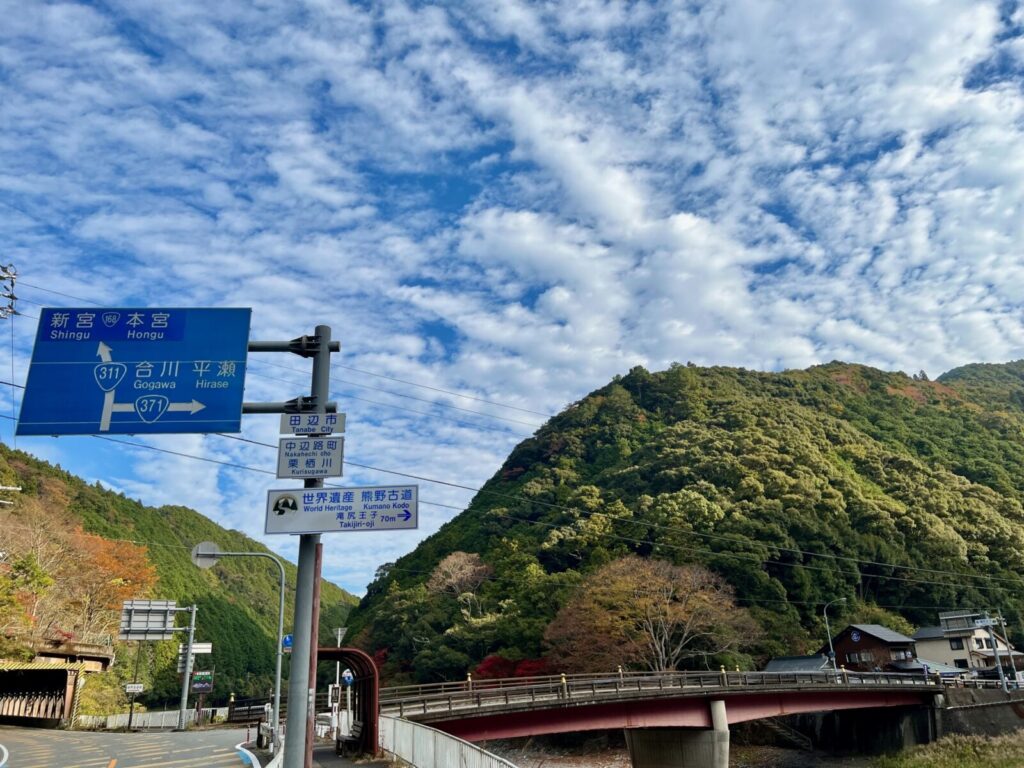
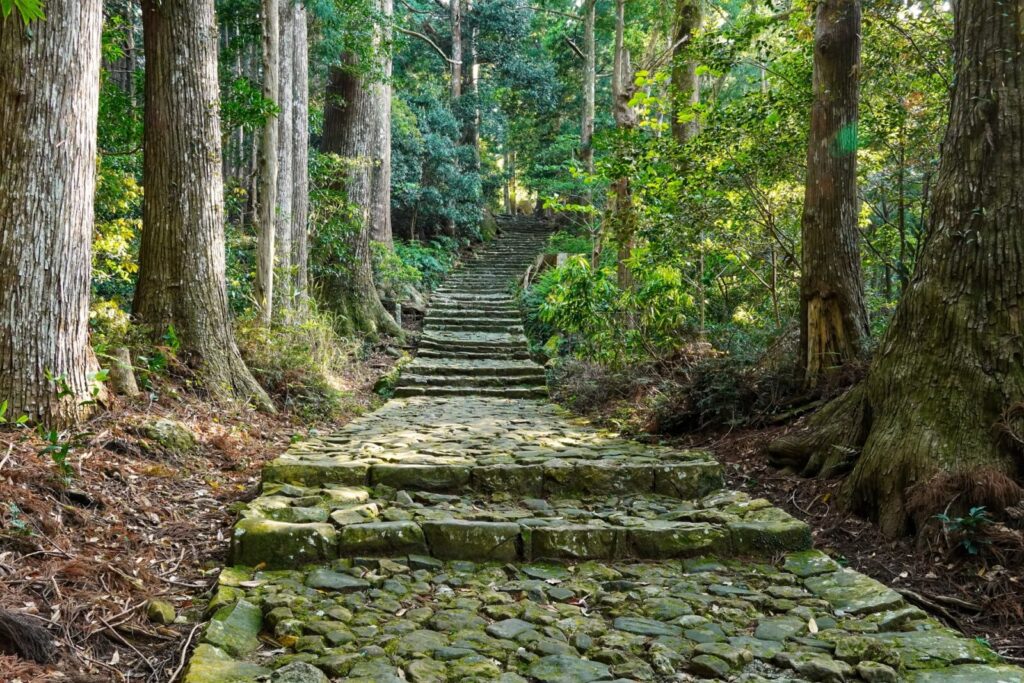
The Kumano Kodo (熊野古道) is a network of ancient pilgrimage routes on the Kii Peninsula linking the three grand shrines of Kumano Hongu Taisha, Kumano Nachi Taisha, and Kumano Hayatama Taisha, and is part of the UNESCO-listed Sacred Sites and Pilgrimage Routes in the Kii Mountain Range. The historic stone and forest sections are protected footpaths and bicycles are not permitted on the pilgrimage trails themselves but are great for some walking off the bike. Cyclists instead use public roads that parallel or connect trailheads, linking towns such as Tanabe, Hongu, and Kii-Katsuura. The terrain is mountainous with sustained climbs.
Nachi Falls
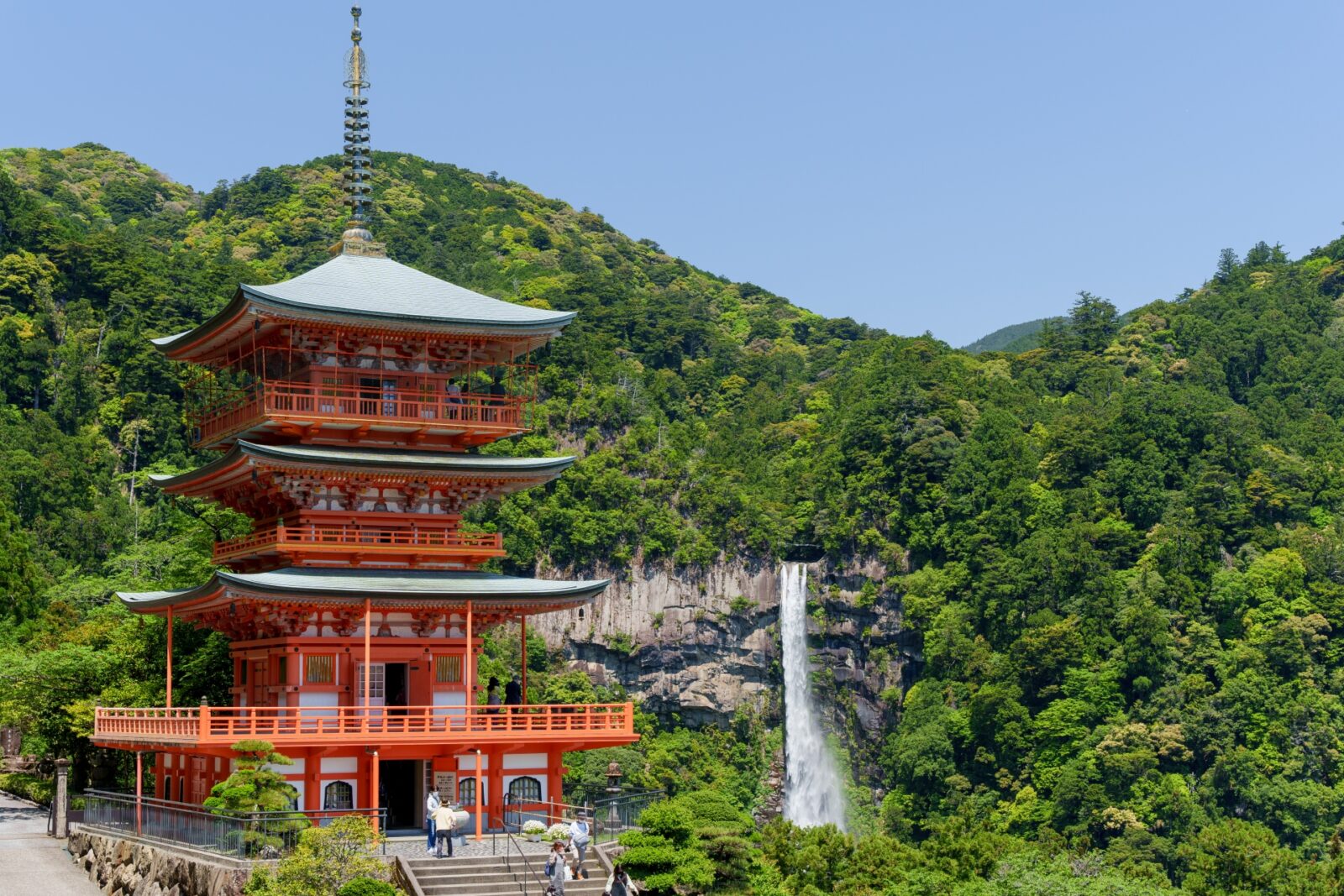
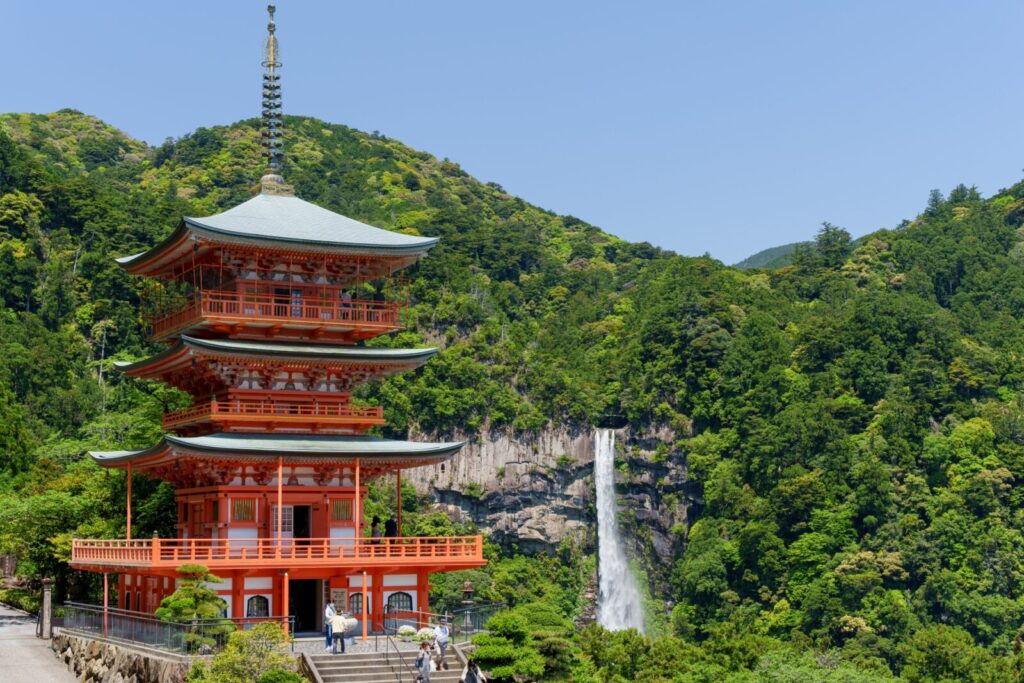
Nachi Falls (那智の滝) is a 133-meter waterfall in Wakayama Prefecture and part of the UNESCO-listed Sacred Sites and Pilgrimage Routes in the Kii Mountain Range, associated with Kumano Nachi Taisha and the adjacent Seiganto-ji temple. It is Japan’s tallest single-drop waterfall and has been an объект of mountain worship for over a millennium. The waterfall itself is reached via stone steps from the shrine complex and is strictly pedestrian. Cyclists access the area via Route 42 and Prefectural Route 43 from Kii-Katsuura, climbing steadily inland from the coast. The ascent is sustained but paved throughout, making it suitable for road bikes with low gearing.
Getting there and away
Toba
Toba is accessible by train (Kintetsu and JR) as well as regular ferry across the Ise bay. From the other end of the ferry it’s about 40km to Toyohashi station on the Tokkaido Shinkansen.
Wakayama
Wakayama provides good train back to Osaka via the Nankai and JR railways as well as a ferry service for an onward tour to Shikoku via a ferry to Tokushima